
Key Battles of Knights of Saint John
March 28, 2024Table of Contents
Introduction
Rhodes Old Town is usually described through its walls, gates and medieval grandeur. Yet on the eastern edge of the city, the atmosphere shifts. The streets narrow, the crowds thin out, and the tone becomes quieter. The Jewish Quarter in Rhodes, known as La Juderia, unfolds without spectacle. Its history is not expressed through scale, but through memory, texture and lived space.
Walking here feels different from walking elsewhere in the Old Town. The rhythm slows almost on its own. Corners invite you to pause. Details replace dramatic views. Exploring the Jewish Quarter in Rhodes becomes less about sightseeing and more about paying attention to a neighbourhood shaped by centuries of community life and endurance.
The Heart of the Jewish Quarter in Rhodes
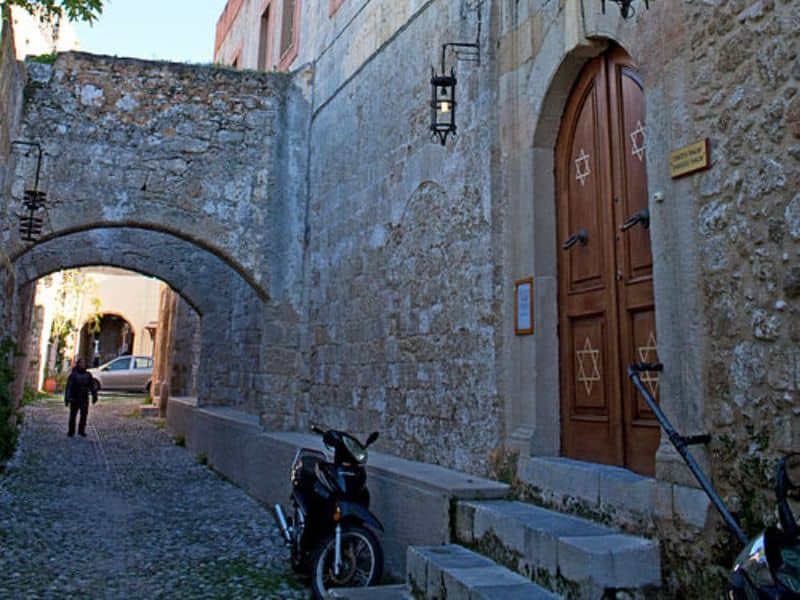
The walk often begins at the Square of the Jewish Martyrs, the historic centre of La Juderia. It is an open space, simple and unassuming. In earlier centuries, this was where daily routines overlapped — markets, conversations, shared errands. Today, the square feels calm, but not empty. It carries a sense of continuity beneath its stillness.
Close by stands the Holocaust Memorial, marking the deportation of the Jewish population in 1944 during the Second World War. Families who had lived in the Jewish Quarter in Rhodes for generations were forced to leave, and very few returned. The memorial does not dominate the square. It stands quietly, asking for reflection rather than attention. The weight of history here is felt more than announced.
Landmarks of Memory and Continuity
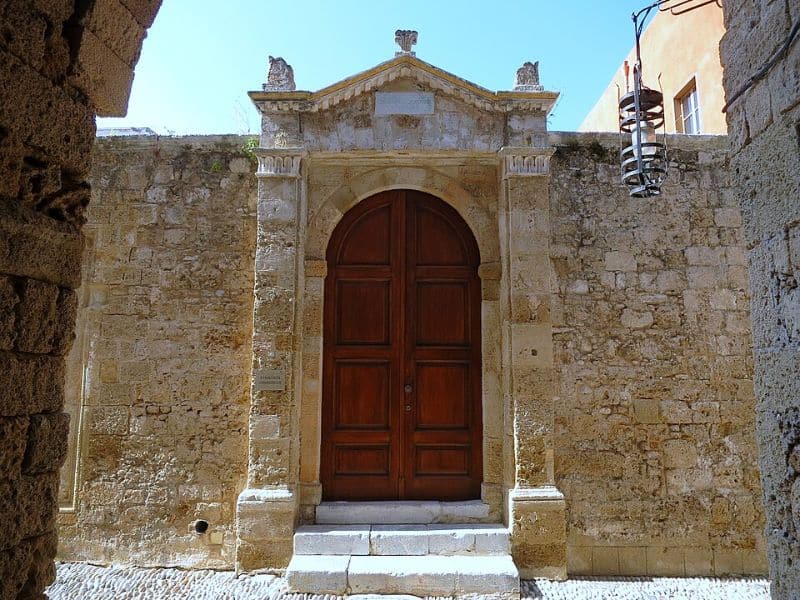
A short walk leads to the Kahal Shalom Synagogue, the most significant surviving landmark of the Jewish Quarter in Rhodes. Built in 1577, it remains the oldest synagogue in Greece and the only one still standing from the six that once served the community. Its structure reflects Sephardic traditions brought to the island after the expulsion from Spain in the late fifteenth century.
Next door, the Jewish Museum of Rhodes adds another layer to the experience. Photographs, documents and everyday objects reveal ordinary lives once lived in these streets. The focus is not only on major events, but on family, work and routine. That connection between space and personal story shifts the walk from architectural observation to something more human.
Walking Through Hidden Streets and Everyday Life
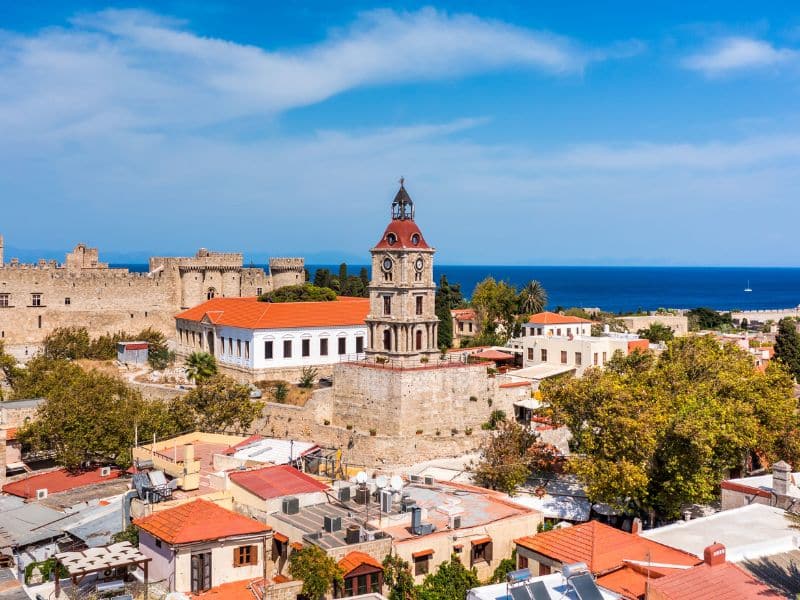
Beyond the main landmarks, the atmosphere changes again. Dossiadou and Pindarou streets narrow into quieter passages where homes and small workshops once stood. These lanes formed the everyday framework of the Jewish Quarter in Rhodes. Today, they remain peaceful, slightly removed from the busier medieval routes.
If you look closely, subtle traces begin to appear. Hebrew inscriptions on stone. Old plaques fixed beside doorways. Architectural details that hint at former uses. None of these announce themselves loudly. They reward patience.
Further into La Juderia, residential corners soften the experience. Courtyards bloom with flowers, bougainvillea climbs along worn walls, and shaded passages filter the light. The city sounds fade. What remains is a sense that this is still a living space — not a museum set behind ropes, but a neighbourhood that continues quietly.
Conclusion
By the end of the walk, the Jewish Quarter in Rhodes reveals itself not through monumental display, but through atmosphere and memory. It offers a perspective on the Old Town that is intimate and reflective rather than grand.
Exploring the Jewish Quarter in Rhodes is not simply a route between landmarks. It is an encounter with stories that linger in courtyards, inscriptions and open squares. La Juderia does not demand attention. It asks for awareness — and in doing so, allows its history to remain present within everyday life.