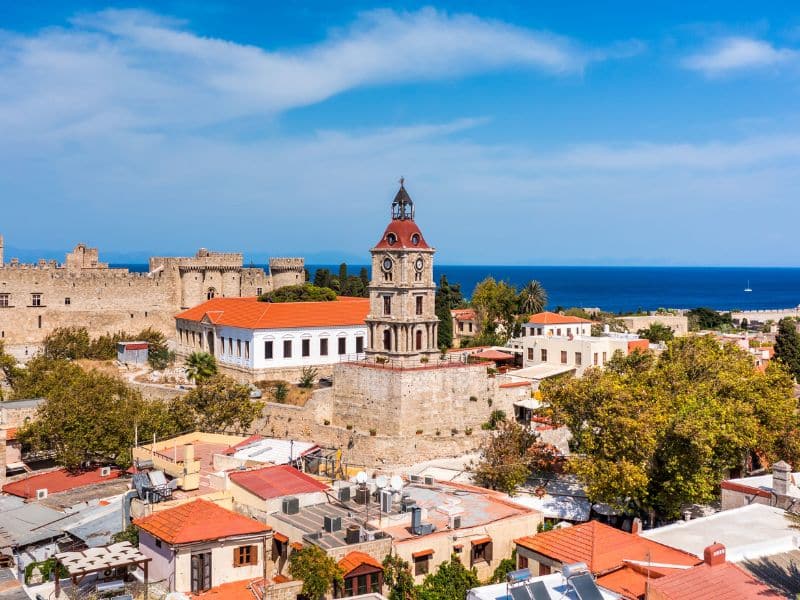

Exploring the Jewish Quarter in Rhodes: A Walk Through La Juderia’s Hidden Stories
March 1, 2025Table of Contents
Introduction
Rhodes Old Town is often photographed for its arches and stone alleys. But its real character reveals itself when you start looking at how the city was built — not for beauty, but for defence. Behind the gates and towers lies a carefully designed system. Following the path of the Hospitaller Knights in Rhodes shifts the focus from charm to structure, from appearance to purpose.
This route is not random. It traces the logic of a fortified city shaped by calculation and necessity. Every wall connects to another. Every gate answers a threat. Walking it feels less like sightseeing and more like uncovering the blueprint of a medieval stronghold.
The Strategic Heart of the Hospitaller Knights in Rhodes
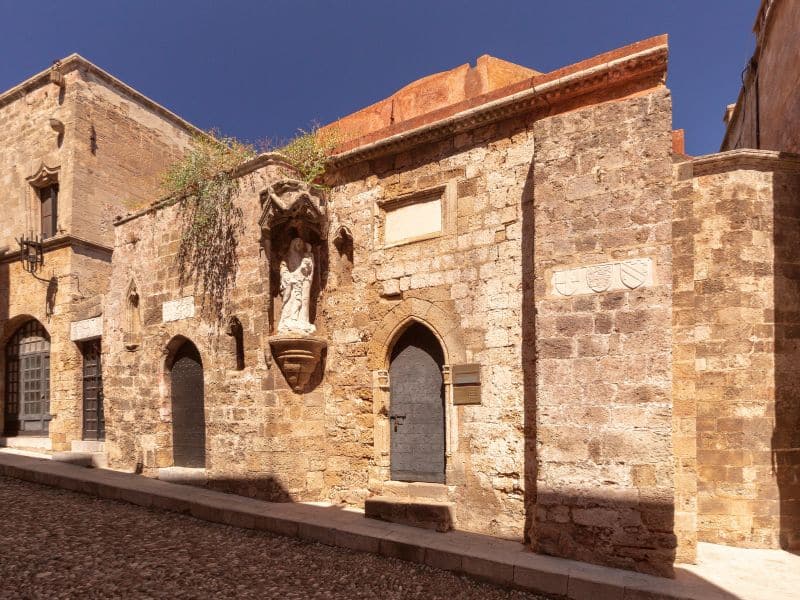
The walk begins at Liberty Gate, one of the principal entrances to the Old Town. For centuries, this was the threshold between harbour and fortress. Merchants entered here. Soldiers stood guard. Movement was observed and controlled. Crossing the gate today still carries a subtle shift in atmosphere — the open port gives way to enclosed stone and measured space.
Not far inside stands the Knights’ Hospital, now home to the Archaeological Museum. The building reflects the dual identity of the Hospitaller Knights in Rhodes. They were warriors, yes — but also caregivers. Pilgrims travelling toward the Holy Land received treatment within these walls. Defence and service coexisted, shaping how the city functioned internally.
Walking the Military Axis of the City
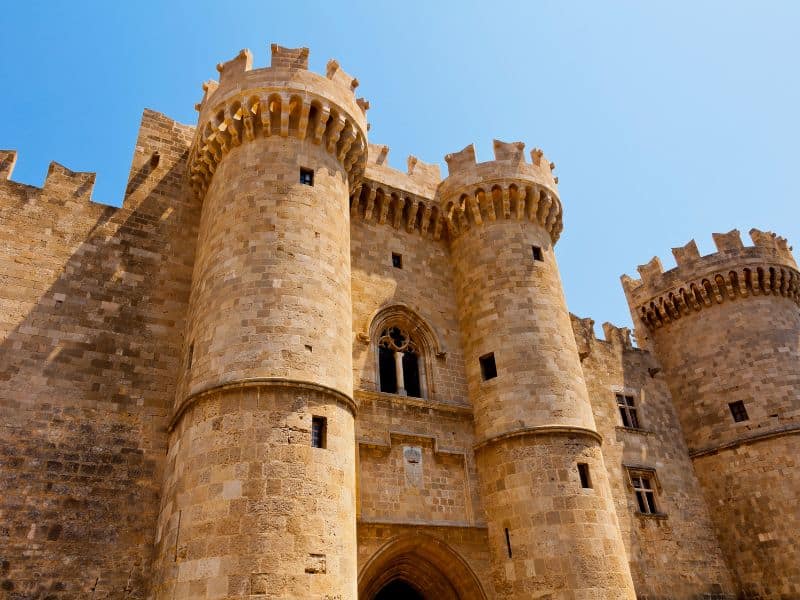
From the hospital, the route naturally leads to the Street of the Knights. The incline is slight, the paving stones worn smooth. This was once the administrative core of the Order. Each residence belonged to a different “language,” or national division, reflecting the international structure of the Hospitaller Knights in Rhodes.
The street remains remarkably intact. Heavy doors, carved emblems, solid façades — nothing feels decorative. The buildings project authority and discipline. This was not a casual neighbourhood. It was an organised network supporting governance and defence.
At the top stands the Palace of the Grand Master. Its scale dominates the space around it. From here, leadership decisions were made, alliances negotiated, strategies planned. The placement of the palace was deliberate — elevated, protected, central. In the broader story of the Hospitaller Knights in Rhodes, this was the command point of the island.
The Evolution of Defence and Fortifications
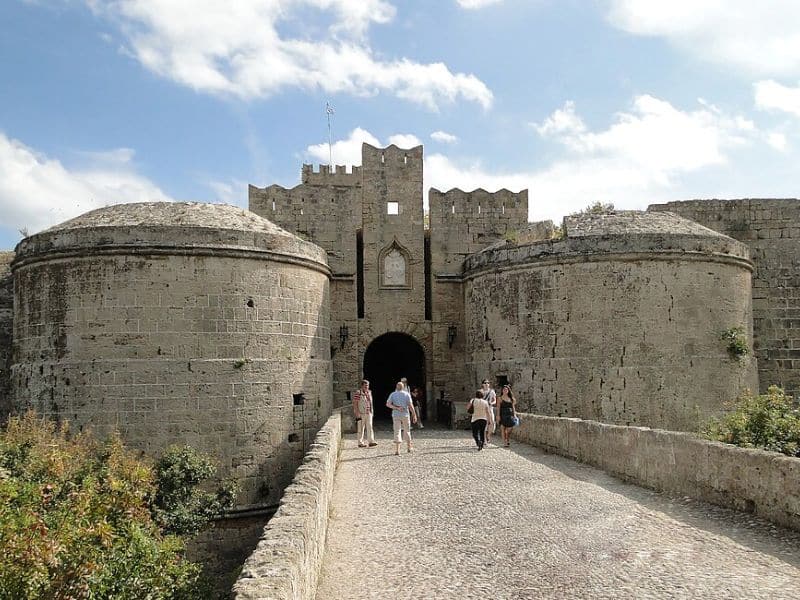
Leaving the palace, the route bends toward D’Amboise Gate. After the Ottoman siege of 1480, the Knights strengthened this entrance significantly. Layers were added. Angles sharpened. Defensive depth increased. The architecture reveals adaptation — a response to the rise of artillery and shifting methods of warfare.
Further along, the Bastion of St George demonstrates that evolution even more clearly. Its thick walls and angled surfaces were designed to deflect cannon fire. Standing there, the logic becomes visible. The Hospitaller Knights in Rhodes were not merely building walls; they were anticipating attack, calculating impact, adjusting to technological change.
From Fortress to Open Space
The final stretch leads into the moat, the vast dry trench surrounding the city. Once the first obstacle for any advancing force, it now feels unexpectedly open. Grass grows where soldiers once stood. The silence contrasts sharply with its original purpose.
From this lower vantage point, the scale of the fortifications becomes unmistakable. The walls rise high above, revealing the full dimension of the defensive system. Rhodes was not simply protected by walls — it was engineered around them.
Conclusion
By the end of the walk, Rhodes Old Town feels different. What first appeared as a preserved medieval setting reveals itself as a coordinated structure shaped by discipline and foresight. The Hospitaller Knights in Rhodes left behind more than monuments. They left a functioning defensive network where each element served a role.
Following this route offers more than architectural appreciation. It provides insight into how a fortress city operated as a living organism — structured, alert and constantly adapting. Through the path of the Hospitaller Knights in Rhodes, the Old Town becomes less decorative and more strategic, defined by purpose as much as by history.